Soaking and germinating seeds

20/12/2023 Views: 2848

Properly performing the soaking and germinating seed techniques will result in a high germination rate, eliminating some types of diseases and parasites on the seeds

- Re-drying seeds: Seeds need to be re-dried for 6-8 hours in mild sunlight (do not dry directly on brick or cement floors). Re-drying helps the seeds absorb water quickly, promotes enzyme system activity, and increases germination ability.

- Test germination rate

- Select good seeds, remove floating seeds by various methods: using a fan, sieving, or during the soaking process remove all floating seeds and keep the sinking seeds (good seeds).
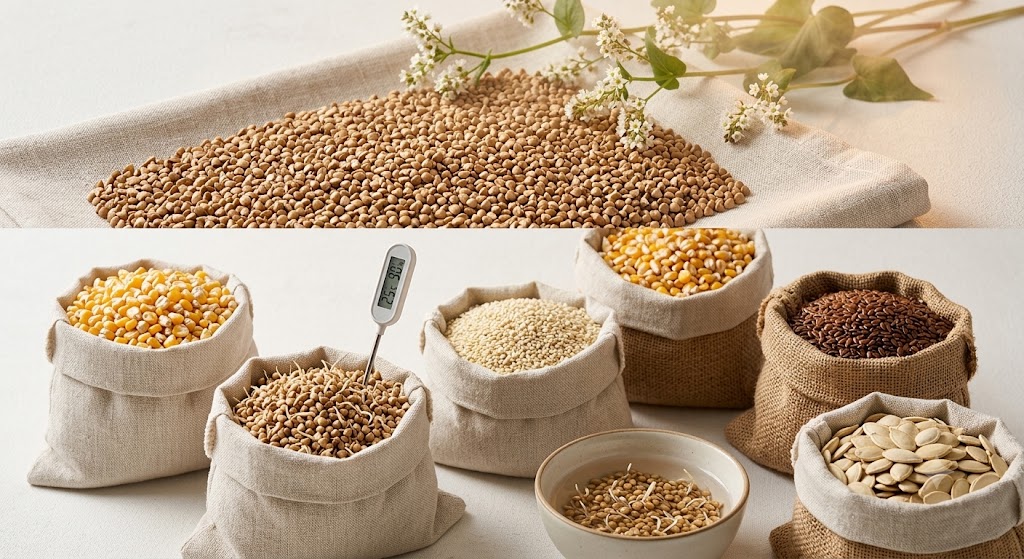
- Seed treatment: One of the following methods can be used:

  • Treatment with hot water at 54°C (mix ratio 3 boiling water to 2 cold water): Soak seeds in cold water for 24 hours, then put into hot water at 45-47°C for 5 minutes and finally hot water at 54-55°C for 10 minutes. This is the simplest method, effective in killing fungi and nematodes on seeds, making seeds absorb water quickly.

  • Treatment with lime water: Dissolve 1kg of quicklime in 100 liters of water, soak for 1-2 days in the rainy season, 3-4 days in the spring season, then rinse clean and germinate.

  • Treatment with Formalin chemical: Spray 2% solution on seeds (5 liters of solution for 50 kg of seeds), seal and keep for 3 hours, then rinse clean and germinate.

For newly harvested seeds intended for immediate sowing, apply dormancy-breaking treatment to increase germination rate. Use 0.2% nitric acid (100 ml solution for 120-140 kg of seeds) to break dormancy or use superphosphate as a substitute.

Soaking and germinating seeds

  • Soaking seeds: To germinate, seeds must be soaked to absorb sufficient moisture. Soaking time depends on temperature, 1-2 days in the rainy season, 2-3 days in the winter-spring season. During soaking, seeds undergo anaerobic respiration, lack oxygen causing acidic water, so water must be changed once daily.

  • Germination incubation: After seeds have absorbed enough water, incubate to allow seeds to germinate. During incubation, periodically spray water and stir seeds to ensure even germination.

  • When seeds have sprouted: alternate "soaking days and incubation nights" to develop balanced shoots and roots. In the rainy and summer-autumn seasons, just incubate until the radicle cracks; in the winter-spring season, longer sprouts are needed.

Tags:
Khang Nong

Other Articles

Manual hybridization technique: emasculation, pollen application for F1 hybrid seeds

In the high-tech crop seed production industry, F1 hybrid seeds are always the "golden key" helping farmers achieve superior yields, excellent disease resistance, and high adaptability to climate change. To create F1 seeds that fully carry the superior hybrid advantages from both father and mother, the manual hybridization technique – including two key steps: emasculation (removal of male flowers) and pollen application (pollination) – plays a decisive role in 90% of the success rate.

F1 Hybrid Seedling Germination Process at Lam Tai: Closed Standard International Standard

In the high-tech agriculture sector, producing F1 hybrid seeds that meet strict standards for purity and germination rate is always a major challenge for many businesses. At Lam Tai Vegetable Seed Production Co., Ltd (Duc Trong, Lam Dong), we are proud to apply a closed self-production farm model (SOP, KPI) combined with an ERP software system since 2009 to strictly control from the stage of germinating original seeds to export.

What is Seed Community Systems Agriculture (Seed Community Systems Agriculture là gì)

It is a model of organizing production, conservation, and distribution of seeds based on the active participation of the local community to ensure a diverse, sustainable, and suitable seed source for local conditions.

Consultation on opening a seed business store with low capital

Vietnam is an agricultural country, so the demand for seeds for cultivation is very large. In addition, the movement to use clean products is very popular. Many urban families also take advantage of rooftops to grow green vegetables for their families. With just these two reasons, we can see the good development potential of the seed business sector in the future.

The latest seed export procedures currently

Missing a Phytosanitary Certificate, a seed batch worth hundreds of millions of dong can be held at the port, even returned or completely destroyed. Unlike ordinary agricultural products, seeds are subject to dual control: both managed by the Ministry of Agriculture and Rural Development for seed quality and required to undergo plant quarantine before export. Missing just one step risks breaking the entire shipping schedule and contracts with foreign partners.

Safety

Efficiency

Increase Productivity

messenger