Properly performing the soaking and germinating seed techniques will result in a high germination rate, eliminating some types of diseases and parasites on the seeds
- Re-drying seeds: Seeds need to be re-dried for 6-8 hours in mild sunlight (do not dry directly on brick or cement floors). Re-drying helps the seeds absorb water quickly, promotes enzyme system activity, and increases germination ability.
- Test germination rate
- Select good seeds, remove floating seeds by various methods: using a fan, sieving, or during the soaking process remove all floating seeds and keep the sinking seeds (good seeds).
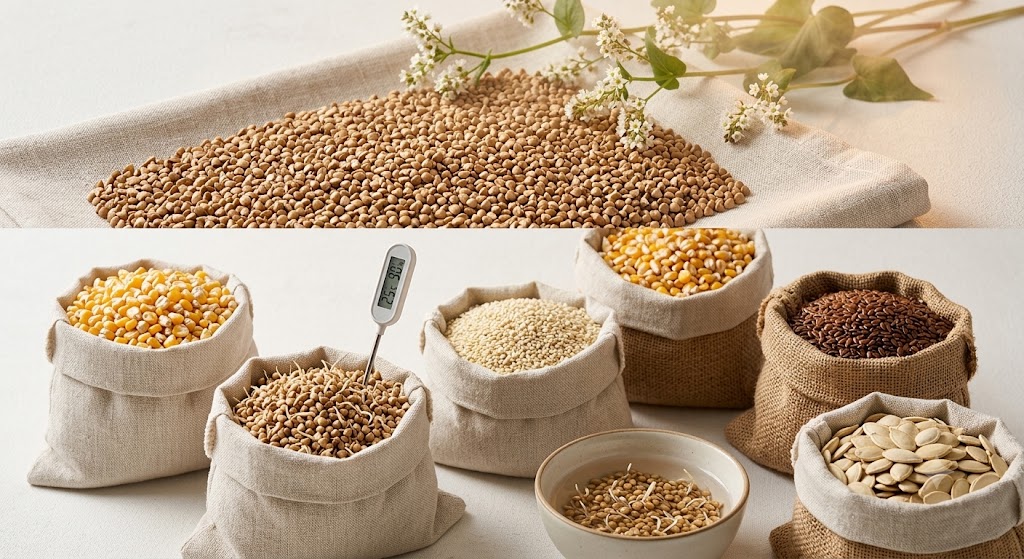
- Seed treatment: One of the following methods can be used:
-
Treatment with hot water at 54°C (mix ratio 3 boiling water to 2 cold water): Soak seeds in cold water for 24 hours, then put into hot water at 45-47°C for 5 minutes and finally hot water at 54-55°C for 10 minutes. This is the simplest method, effective in killing fungi and nematodes on seeds, making seeds absorb water quickly.
-
Treatment with lime water: Dissolve 1kg of quicklime in 100 liters of water, soak for 1-2 days in the rainy season, 3-4 days in the spring season, then rinse clean and germinate.
-
Treatment with Formalin chemical: Spray 2% solution on seeds (5 liters of solution for 50 kg of seeds), seal and keep for 3 hours, then rinse clean and germinate.
For newly harvested seeds intended for immediate sowing, apply dormancy-breaking treatment to increase germination rate. Use 0.2% nitric acid (100 ml solution for 120-140 kg of seeds) to break dormancy or use superphosphate as a substitute.
Soaking and germinating seeds
-
Soaking seeds: To germinate, seeds must be soaked to absorb sufficient moisture. Soaking time depends on temperature, 1-2 days in the rainy season, 2-3 days in the winter-spring season. During soaking, seeds undergo anaerobic respiration, lack oxygen causing acidic water, so water must be changed once daily.
-
Germination incubation: After seeds have absorbed enough water, incubate to allow seeds to germinate. During incubation, periodically spray water and stir seeds to ensure even germination.
-
When seeds have sprouted: alternate "soaking days and incubation nights" to develop balanced shoots and roots. In the rainy and summer-autumn seasons, just incubate until the radicle cracks; in the winter-spring season, longer sprouts are needed.